Focused arrival windows
Useful updates and clear arrival timing.
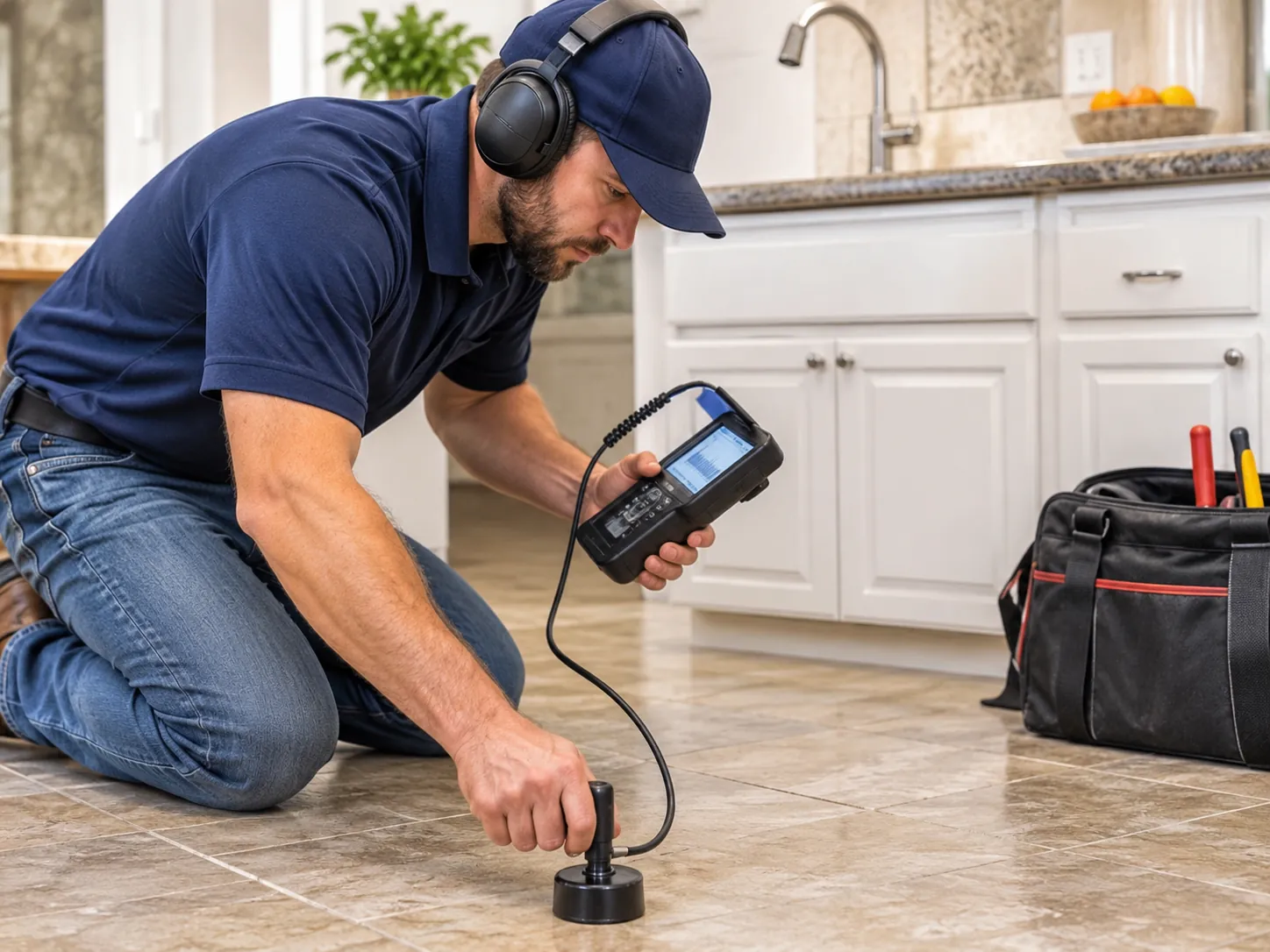
Slab leak detection Valrico FL is how we find the exact break under your floor without tearing the whole house apart. If your water bill jumped, a warm spot appeared on the tile, or you hear water running with every fixture off, we bring electronic slab leak detection Valrico equipment to your door and locate the leak the same day. We serve homeowners across Valrico, Florida and Hillsborough County.
Useful updates and clear arrival timing.
Review the approach and price before deciding.
Equipped vehicles and respectful cleanup.
Neighbors serving neighbors with follow-through.
Every detection visit includes the full instrument sweep, a confirmed leak location, and a written repair range. Repair, rerouting, and concrete patching are quoted separately so you can see exactly what each part costs before you commit.
We shut the main and isolate the hot and cold sides separately, then pressurize each with gauges. This tells us which line failed and rules out fixtures, irrigation, and the water heater before we ever look at the slab.
We walk the entire slab with acoustic listening devices and a thermal imaging camera, listening for escaping water and looking for heat signatures. The two tools cross-check each other so we are not chasing a false positive.
Pipe locators trace the path of the under-slab line so we know exactly where it runs, not where we assume it runs. We mark the floor with tape at the signal peak, usually narrowing the target to a 6-inch window.
A moisture meter maps how far water has spread under the slab and up into adjacent walls. That map tells us whether mold growth from slab leak moisture is a risk and how big the drying area needs to be after repair.
You get the pressure-test results, the marked location, and photos of the readings. If you want to hand the repair to another crew, the report gives them everything they need to open the right spot.
Before we cut anything, you get a written range for the repair based on pipe type, depth, and access. Detection fee is credited toward the repair when you hire us to finish the job.
Share what is happening and receive a clear next step from the local team.
Slab leak detection Valrico FL is the process of finding a pressurized water line failure buried beneath your concrete foundation using acoustic listening devices, thermal imaging cameras, and pressure testing gauges instead of demolition. We pressurize the system, isolate the hot and cold sides, then walk the slab with electronic leak detection equipment until the signal locks on. Most homes in Valrico sit on post-tension or poured slabs with copper pipe or PEX tubing running underneath, so the goal is simple: find the leak to within a few inches, then open one small area instead of jackhammering a hallway.
Valrico homes built through the 1980s and 1990s are hitting the age where under slab pipe corrosion turns into pinhole leaks, and the sandy soil plus Florida's aggressive water chemistry speeds that up. A hot water slab leak often shows as a warm patch on the floor; a cold water slab leak usually shows up first on your utility bill. If you have been searching slab leak detection Valrico FL near me at 9 p.m. with water pooling in the laundry room, we run slab leak locating Valrico FL 24/7 and can usually be on site within the hour.
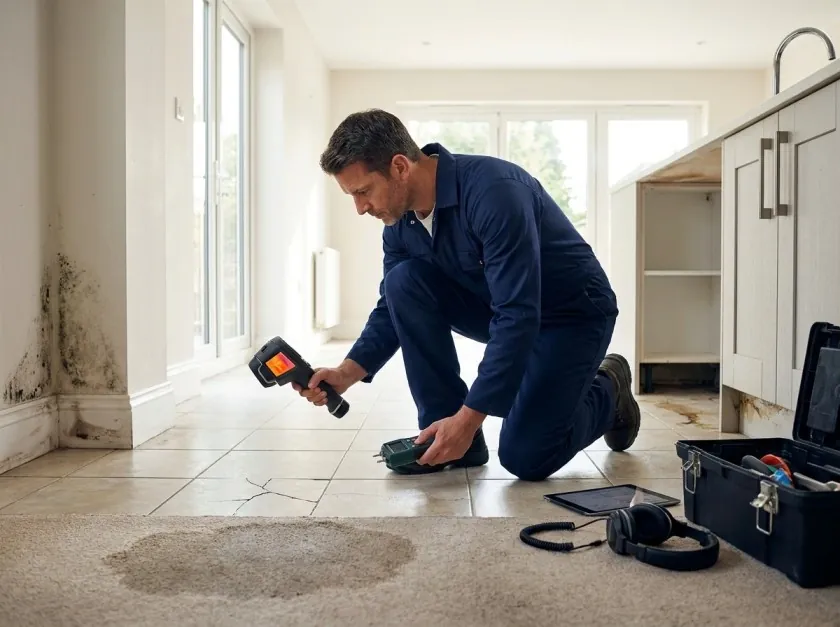
We ask three questions: what is the water bill, is the floor warm anywhere, and do you hear water with everything off. Those answers tell us whether we are chasing a hot water slab leak or a cold water slab leak before we ever load the truck. Most calls get a same-day window, usually within 60 to 90 minutes.
On arrival we shut the main, isolate the hot and cold sides, and pressurize each with pressure testing gauges. A line that will not hold pressure confirms a slab leak and tells us which side of the system failed. This step takes 20 to 30 minutes and costs you nothing in demolition.
We walk the slab with acoustic listening devices and a thermal imaging camera, listening for the hiss of pressurized water escaping the pipe. Pipe locators trace the line path so we know exactly where it runs. We mark the floor with tape when the signal peaks, usually narrowing the break to a 6-inch target.
Before any concrete comes up we verify with a moisture meter and, when the line is accessible, a video inspection camera. Then we cut a small access opening directly over the mark. One 2-foot by 2-foot cut, not a trench. You see the leak with your own eyes before we quote the fix.
We repair the section with copper pipe, PEX tubing, or epoxy pipe lining depending on the pipe and the access, then re-pressurize and hold it for 30 minutes to prove the fix. The opening gets backfilled and finished with a concrete patch. Water is back on the same day on most jobs.
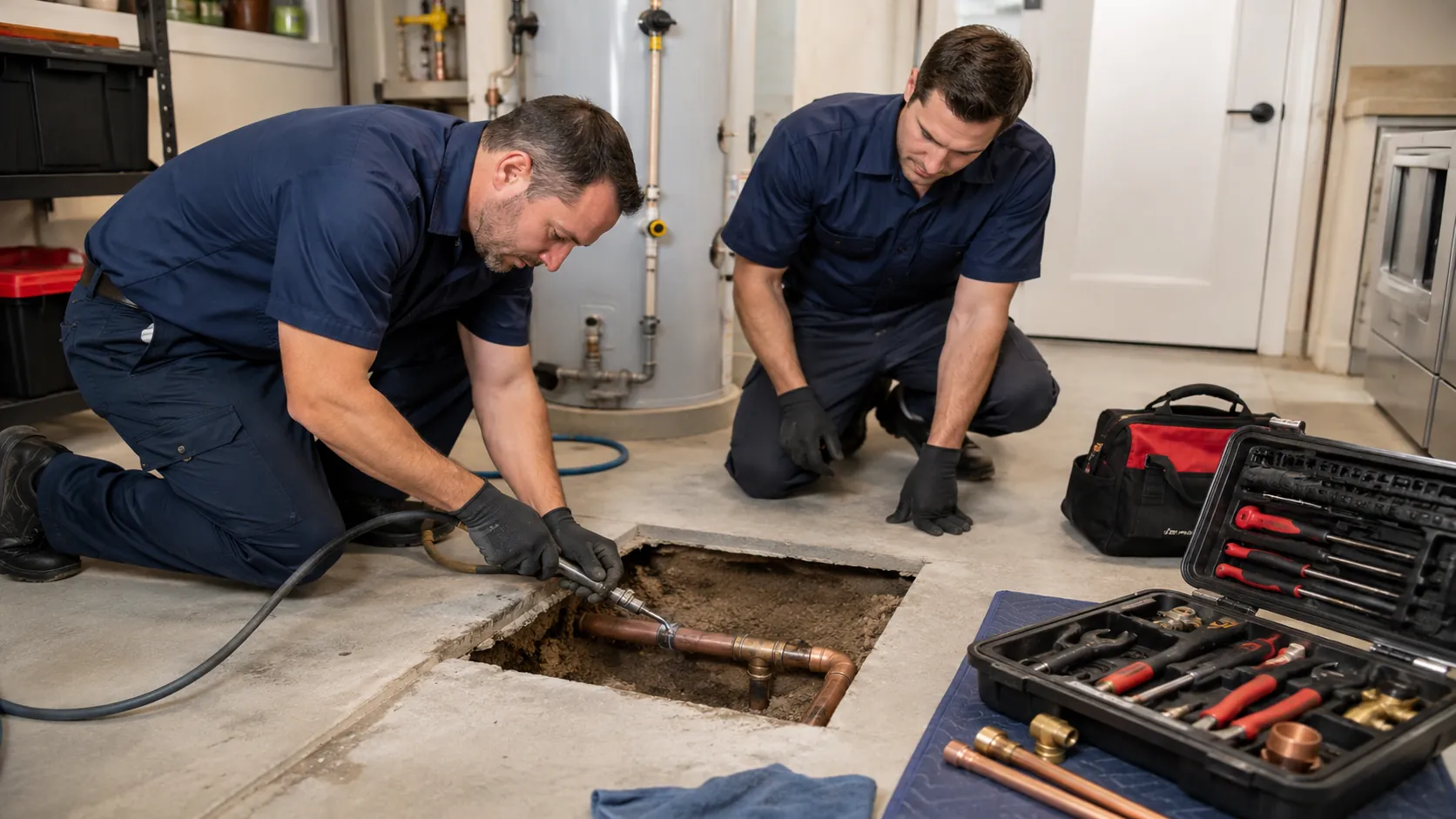
Amplify the sound of pressurized water escaping a pipe so we can hear the break through 4 inches of concrete. This is the primary locating tool on every job.
Show the heat signature of a hot water slab leak on the floor surface. We use them to cross-check the acoustic reading and confirm the target before we cut.
Isolate the hot and cold sides and prove which line is losing pressure. A line that will not hold confirms the leak before any demolition starts.
Trace the path of the under-slab line so we know exactly where it runs. Without this, a repair crew is cutting blind and hoping to hit the pipe.
Run through accessible sections of the line to see corrosion, scale, and joint failures. We use them to decide between a spot repair and a full reroute.
Map how far water has spread under the slab and into adjacent walls. That map drives the drying plan and tells us whether mold is a risk.
Our locating kits are built around RIDGID inspection tools and Fluke meters, the same gear used on commercial leak surveys. Reliable readings, not guesswork.
We shut the main, isolate each side of the system, and pressurize them independently. This narrows the search to one line and rules out fixtures, irrigation, and the water heater. It is the first step on every job and takes about 20 minutes.
We walk the slab in a grid pattern with listening devices, then compare signal strength at each point. The peak reading marks the leak. Cross-checking with a thermal camera cuts false positives to near zero on hot water lines.
When the pipe is failing in multiple spots, we reroute through the attic or walls using PEX tubing or epoxy pipe lining instead of cutting the slab in three places. Less demolition, faster finish, and the new line is accessible if it ever needs service.
After repair we backfill, compact, and finish the opening with a concrete patch matched to the surrounding slab. Work follows State of Florida Plumbing Contractor License requirements and IAPMO Certification standards, and we pressure-test twice before the patch goes down.
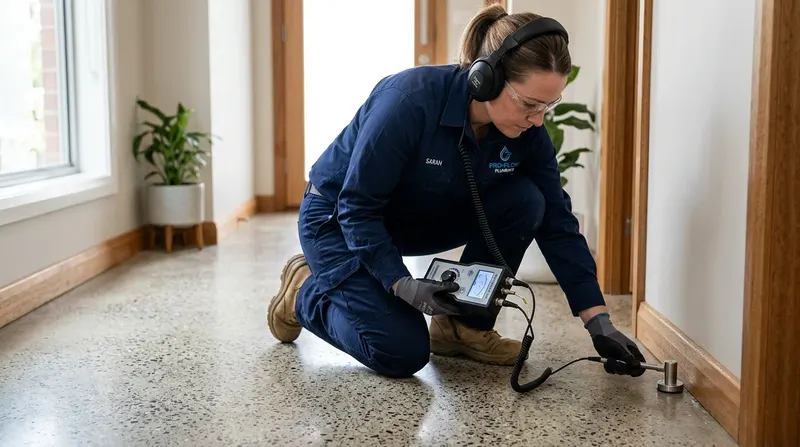
We isolate the cold side, pressure-test, and sweep the slab with acoustic equipment. The break is found under the hallway, opened with one 2-foot cut, and repaired with a copper coupling and new solder joint. Water back on the same afternoon, concrete patched, and the next full billing cycle back to the normal range.
We run slab leak locating Valrico FL 24/7, so a tech is on site within the hour. The main gets shut down, the hot side is isolated, and a thermal camera pinpoints the break under the kitchen tile. The line is repaired before sunrise and the homeowner avoids a flooded kitchen and a ruined cabinet run.
We confirm a hot water slab leak with thermal imaging, then inspect the run with a video camera. The copper is failing in three spots, so we recommend rerouting through the attic instead of three separate slab cuts. One reroute replaces three repairs, the warm spot disappears, and the gas bill drops back to normal within two months.
We run a full pressure test on both sides, document the results, and provide a written location report with photos. No leak found, and the report goes straight to the buyer's agent. The sale closes without a plumbing contingency, and the homeowner has documentation that the under-slab system holds pressure.
Valrico sits on sandy soil over limestone, and that ground moves with our wet season and dry season. When the soil shifts, it stresses the under-slab lines, and copper pipe from the 1980s and 1990s builds is now the most common failure we see. Add Florida's aggressive water chemistry and you get pinhole corrosion on the hot side first, which is why so many Valrico calls start with a warm spot on the tile. Summer is our busiest stretch, June through September, when the ground stays saturated and small leaks spread fast. Winter brings the opposite problem: cold snaps stress older joints and we get a run of cold water slab leaks in January and February. We run slab leak detection service Valrico across ZIP codes 33594 and 33596, and we know which subdivisions have post-tension slabs that need extra care when we cut. If you want affordable slab leak detection in Valrico FL without a trench through your house, this is the market we work in every day.
Mostly 1980s and 1990s builds with original copper under the slab. We see more hot water slab leaks here than anywhere else in Valrico, usually at the 25 to 30 year mark on the pipe.
Newer construction with PEX tubing and post-tension slabs. PEX fails at fittings more than mid-run, so we spend more time tracing the manifold layout before we cut.
Larger custom homes with long under-slab runs and multiple manifolds. Locating takes longer here, and rerouting through the attic is often the smarter repair.
A mix of 1990s copper and early 2000s CPVC. CPVC gets brittle with age, so we handle those lines carefully and often recommend a full section replacement rather than a spot clamp.
Established neighborhood with mature landscaping and irrigation tied into the main. We always rule out irrigation before we test the slab, because the symptoms look identical.
Ground movement stresses buried pipe and opens joints. Most Valrico slab leaks start at a fitting or a bend, not mid-run, which is why line tracing matters as much as listening.
Hot water lines corrode from the inside out, creating pinholes that can run for months before they surface. We see hot water slab leaks roughly twice as often as cold on copper systems.
Cutting a post-tension slab in the wrong spot can sever a tension cable and cause structural damage. We locate the cables before we mark the access opening on every post-tension job.
From June through September the ground stays saturated, so a small leak spreads further and shows up as mold faster. Summer calls get priority scheduling for that reason.
Most Valrico slab leak calls start with one of these four symptoms. Each one has a different cause and a different fix, which is why we test before we quote.
A hidden cold water slab leak can waste 10,000 to 15,000 gallons a month, and the meter keeps spinning until the line is isolated. We pressure-test the cold side, walk the slab with acoustic equipment, and locate the break. Most cold water slab leaks are found and repaired the same day, and the meter stops running the moment we isolate the line.
A hot water slab leak heats the slab from underneath and can warp hardwood, loosen tile, and drive up your gas or electric bill month after month. We isolate the hot side, confirm the break with a thermal imaging camera, and repair or reroute the line. If the copper run is failing in several spots, we tell you honestly whether rerouting through the attic is the better money.
Mold growth from slab leak moisture spreads fast in Florida humidity and can reach the drywall within two to three weeks of the leak starting. We locate the source, repair the under-slab line, and map the moisture with a meter so you know exactly how far it traveled. We tell you what to dry and what to replace, and we pressure-test twice before the concrete patch goes down.
Water softening the soil under a slab causes concrete slab cracking and foundation movement. Left alone, that is a five-figure foundation repair, not a plumbing bill. We find and stop the leak first, because foundation work is pointless while water is still running under the slab. Once the line is repaired and tested, the soil can dry and stabilize, and we document the leak location for your foundation contractor if one is needed.
We isolate the hot and cold lines, pressurize each with gauges, then walk the slab with acoustic listening devices and a thermal imaging camera to hear and see where water is escaping. Pipe locators trace the line path so we can mark the floor. The whole process takes 60 to 90 minutes and involves no demolition until the leak is confirmed.
Detection alone runs $350 to $650 in 2026, and that fee is credited toward the repair if you hire us to fix it. Affordable slab leak detection in Valrico FL comes down to how fast we can isolate the line, not how big your house is. Homes with a single manifold and clear access land at the low end.
Acoustic listening paired with thermal imaging is the most reliable combination for under-slab lines, because one confirms the sound of escaping water and the other confirms the heat signature. We cross-check with pressure testing gauges and a moisture meter. No single tool is perfect, which is why we never rely on just one.
Yes. Non invasive slab leak detection Valrico uses acoustic and thermal equipment from above the floor, so nothing is opened until the break is pinpointed. We only cut concrete after you approve the repair. On most jobs that means one small access opening rather than a trench, and the slab is patched the same day.
Not seeing your question? Our local team can help you understand urgency, scheduling and what to expect.
Ask the local team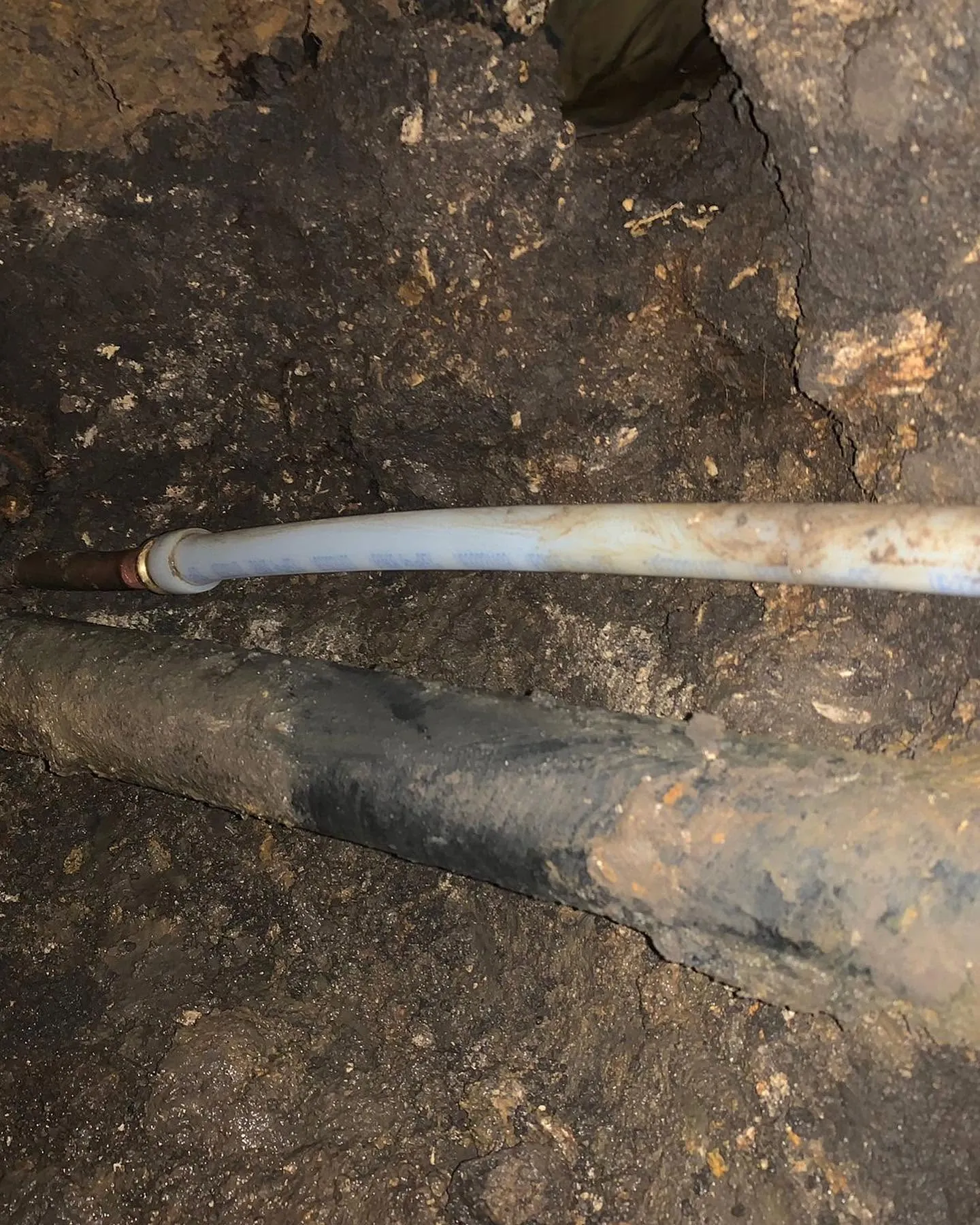
Once detection pinpoints the break, we open a small access panel and repair the failed section with copper, PEX, or epoxy lining. Most repairs are finished and pressure-tested the same day, and the concrete is patched before we leave.
View service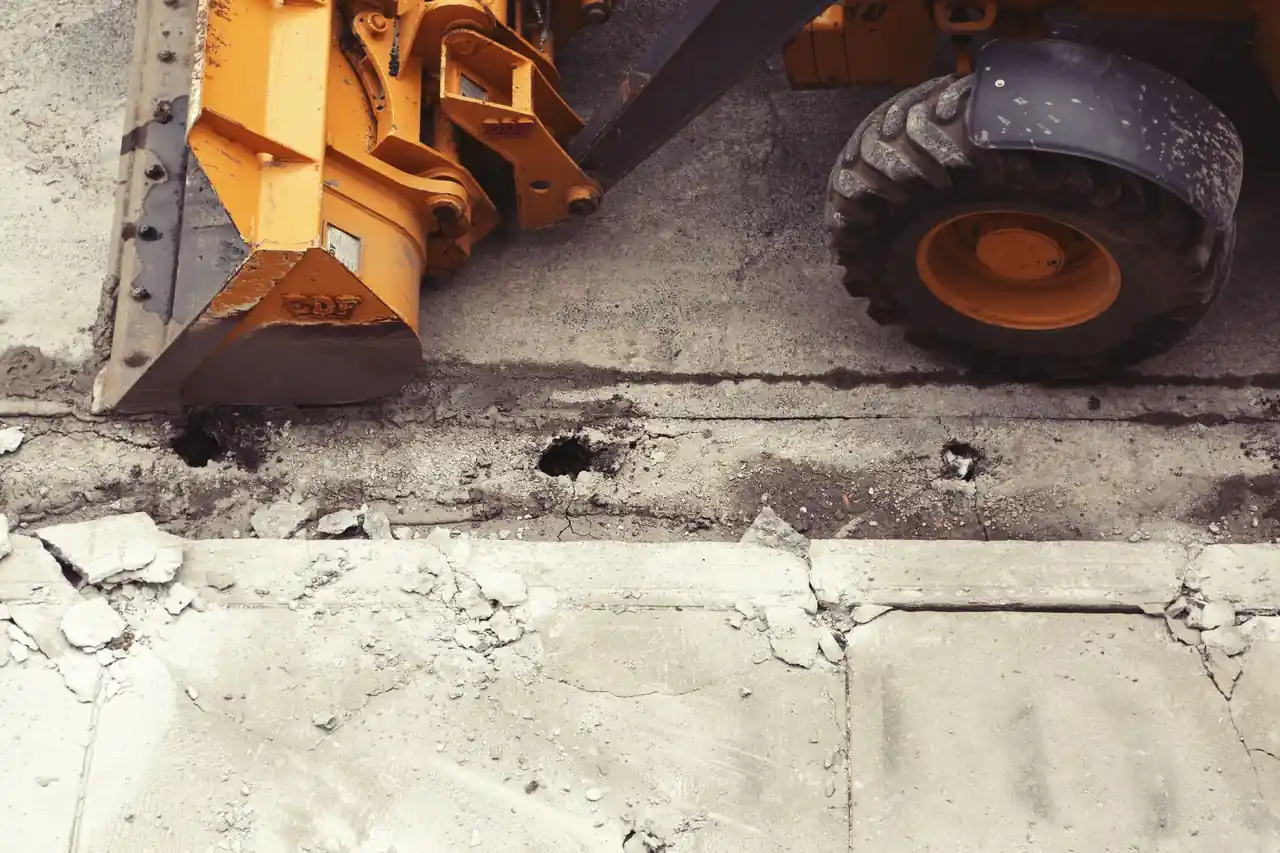
If you are searching slab leak repair near me in Valrico, we run same-day and 24/7 emergency windows across Hillsborough County. Detection comes first, then repair, so you are not paying to open concrete twice.
View service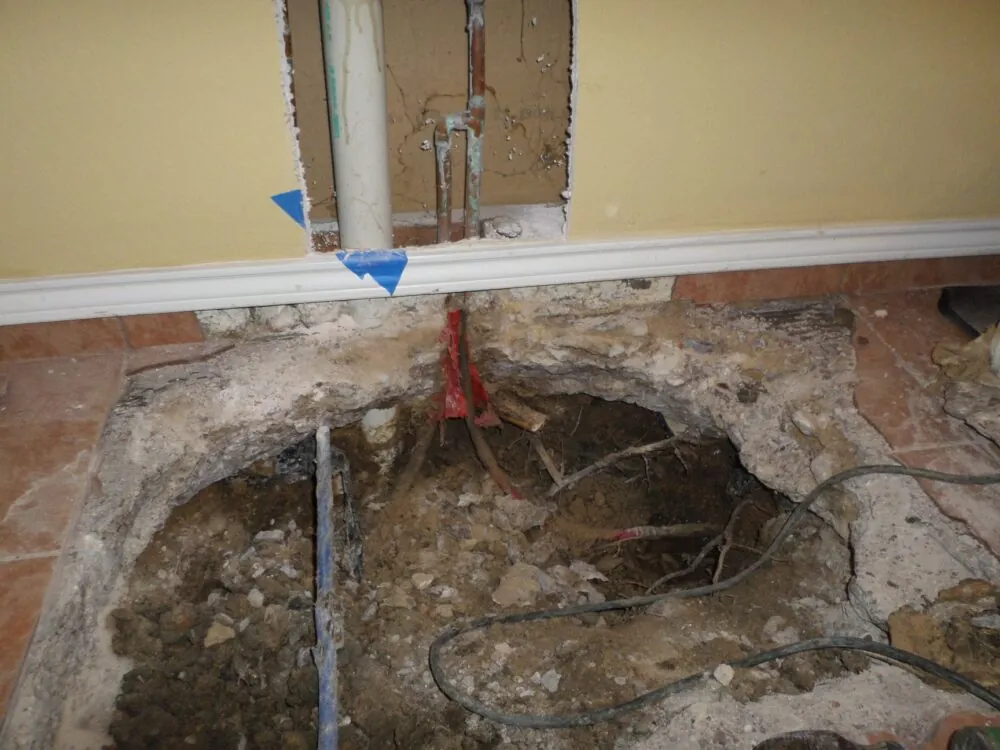
Under slab pipe repair Valrico covers copper, CPVC, and PEX lines buried beneath the foundation. We cut only where detection marked the leak, replace the failed run, and re-pressurize to confirm the line holds.
View service
A burst under-slab line at 2 a.m. is an emergency. We shut the system down, locate the break, and stop the water the same night. Call (813) 768-0964 and a live dispatcher picks up.
View serviceHave a slab leak or suspect one? Call us at (813) 768-0964 or email info@valricoslableakpros.com. We answer calls 24/7 for emergencies and schedule same-day appointments for standard repairs. Our office is in Valrico, and we serve all of Hillsborough County.